I’ve had some quince cores and peels stashed in my freezer since a friend helped me out immensely by preparing the fruit to be candied while I was occupied with brewing-related things. The time has come to turn them into something useful: jelly!
Jelly, or at least what North Americans call jelly, consists of pectin-rich fruit juice and sugar boiled until it reaches a point where it sets into a firm mass. Pectin is a soluble fibre found mostly in the cores, seeds, and peels of fruits, especially citrus and orchard fruits like apples. If you’re trying to make a jelly from a low-pectin fruit (the Kilner Jar company has a nice reference here), then you’ll need to add more. You can buy commercial pectin, which comes in standard, low-sugar, and no-sugar varieties, or you can make your own (which I’ll talk about later).
To test whether your juice contains enough pectin to make into jelly, splash a small sample into a cup with a spoonful of isopropanol (or methylated spirit) and swirl the cup gently. If the juice sets into a firm mass that you can lift out with a fork, you’re good to go; otherwise, it needs additional pectin. Throw this mixture out when you’re done, since isopropanol and methylated spirit are both poisonous.
Now, to make jelly:
- Chop up your fruit and put it into a large pot with just enough water to cover it
- Bring it to a boil, then turn off the heat and cover the pot
- Let the fruit soften and steep until it is cool
- Strain the fruity liquid through a cheesecloth or muslin into a large container
- If you want a clear jelly, don’t squeeze the cloth since this forces fruit fibres through the weave
- If you can’t help squeezing, then you can refrigerate the liquid for a while, let the sediment settle, and carefully decant the liquid off the sediment and into your pot to increase the likelihood of a clear jelly
- Measure the liquid and pour it into a large saucepan
- Measure 80% of the liquid’s volume in granulated sugar and add to the saucepan (it must be no more than 1/3 full at this point)
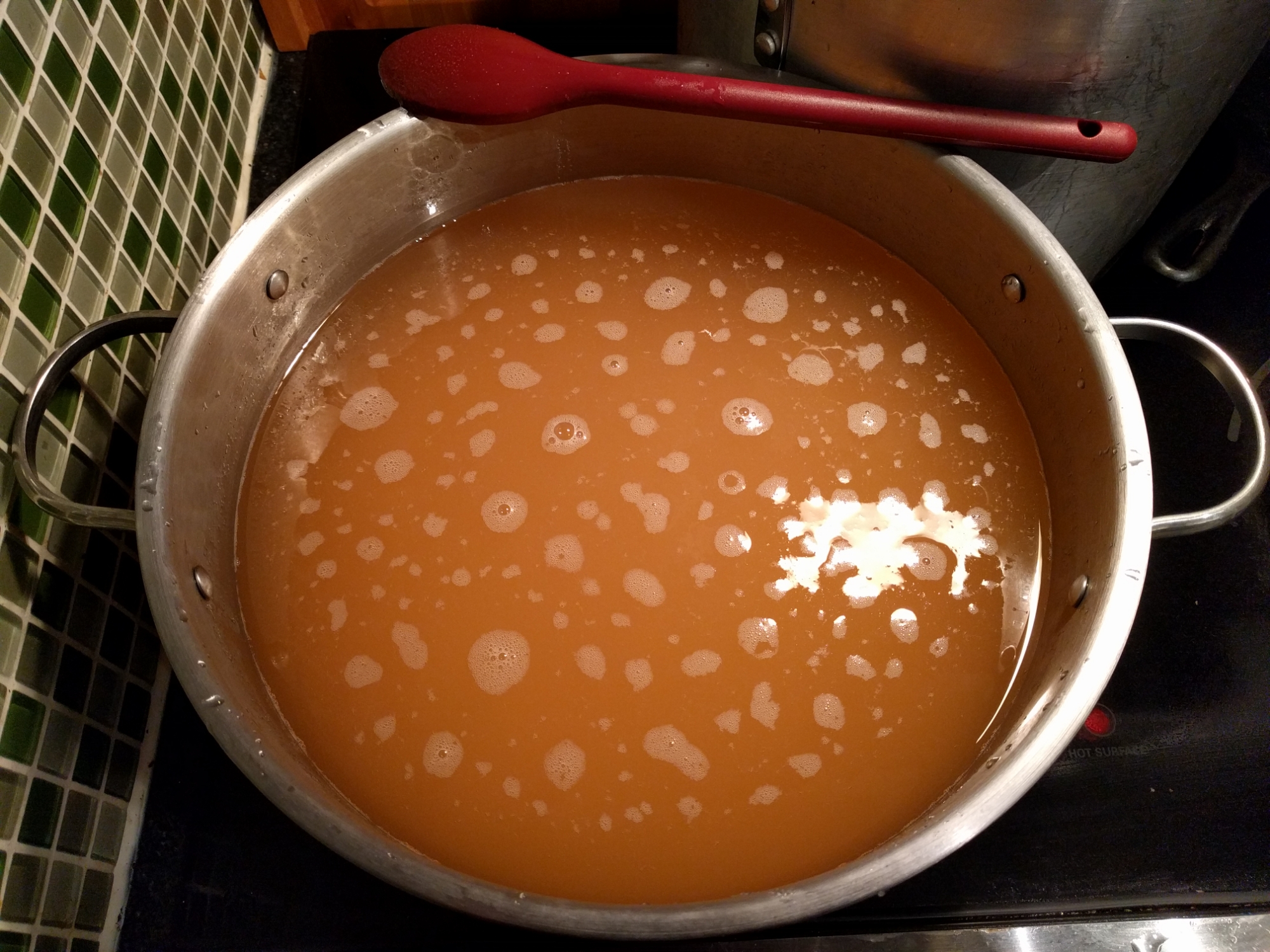
- Prepare your boiling water or pressure canner and jars (here’s a good explanation from Food in Jars)
- Boil, stirring to dissolve the sugar, until the mixture starts to rise up and foam, around 195 degrees F or 90 degrees C, then decrease heat to medium while stirring rapidly to break the foam’s surface tension
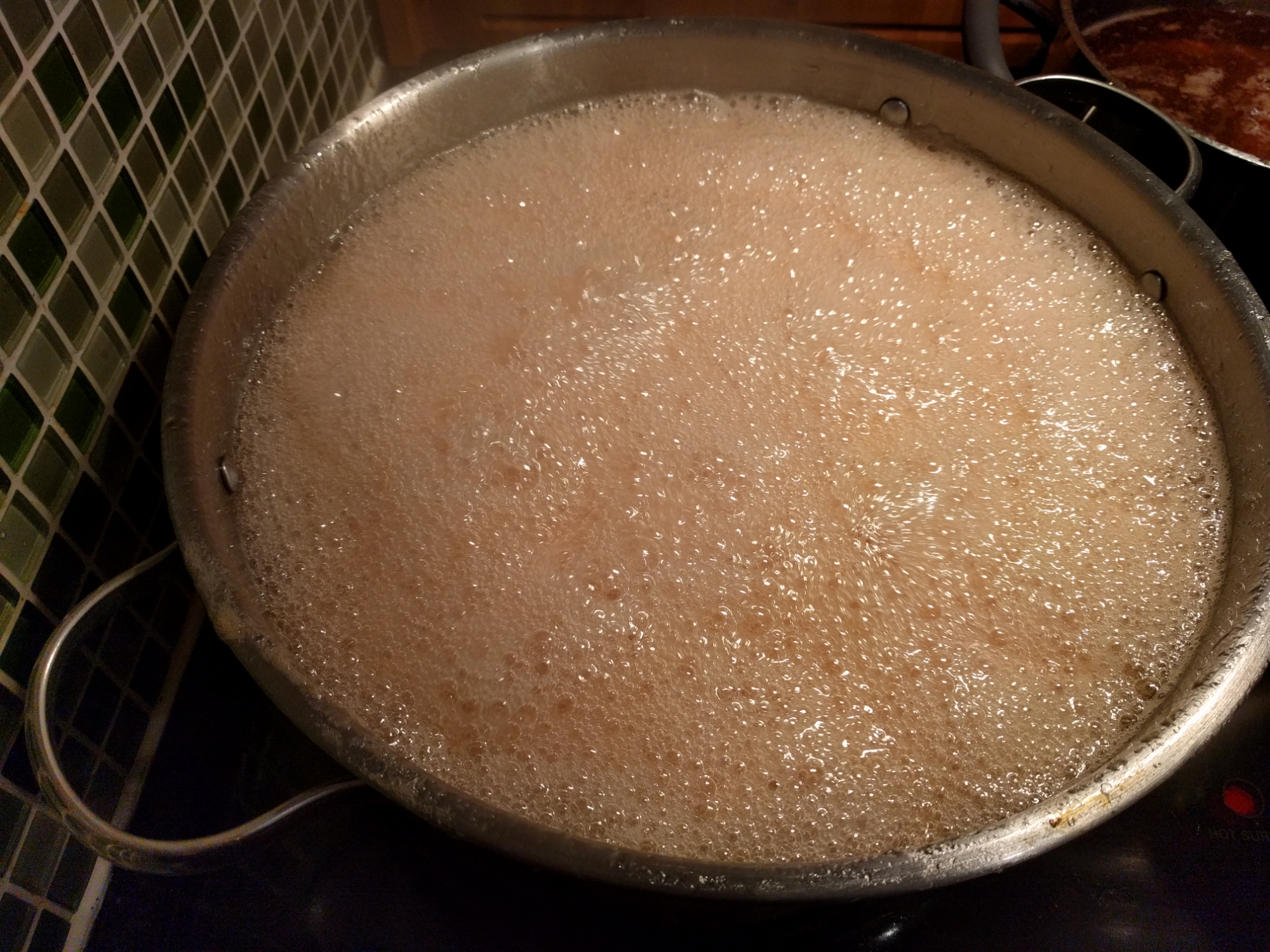
- This is the reason why you shouldn’t overfill your pot; even with over a decade of experience, I still get surprised by how much the mixture foams up (which usually results in an unscheduled cleaning of my range top)
- Check your jelly for doneness in one of three ways:
- Visually only: when the foam has settled down and the bubbles have gotten larger and more viscous as the mixture boils, your jelly is ready to put into jars; with more experience, you will be able to eyeball the mixture and get a sense of its viscosity
- Using a cold plate: keep a plate chilling in your freezer, then splash a blob of the jelly onto the plate and wait one minute; if you can pull your finger through the blob and leave a clean path with the jelly wrinkled around it, your jelly is done
- Using a thermometer: when your mixture reaches 220 degrees Fahrenheit (or 105 degress Celsius), it is ready to put into jars
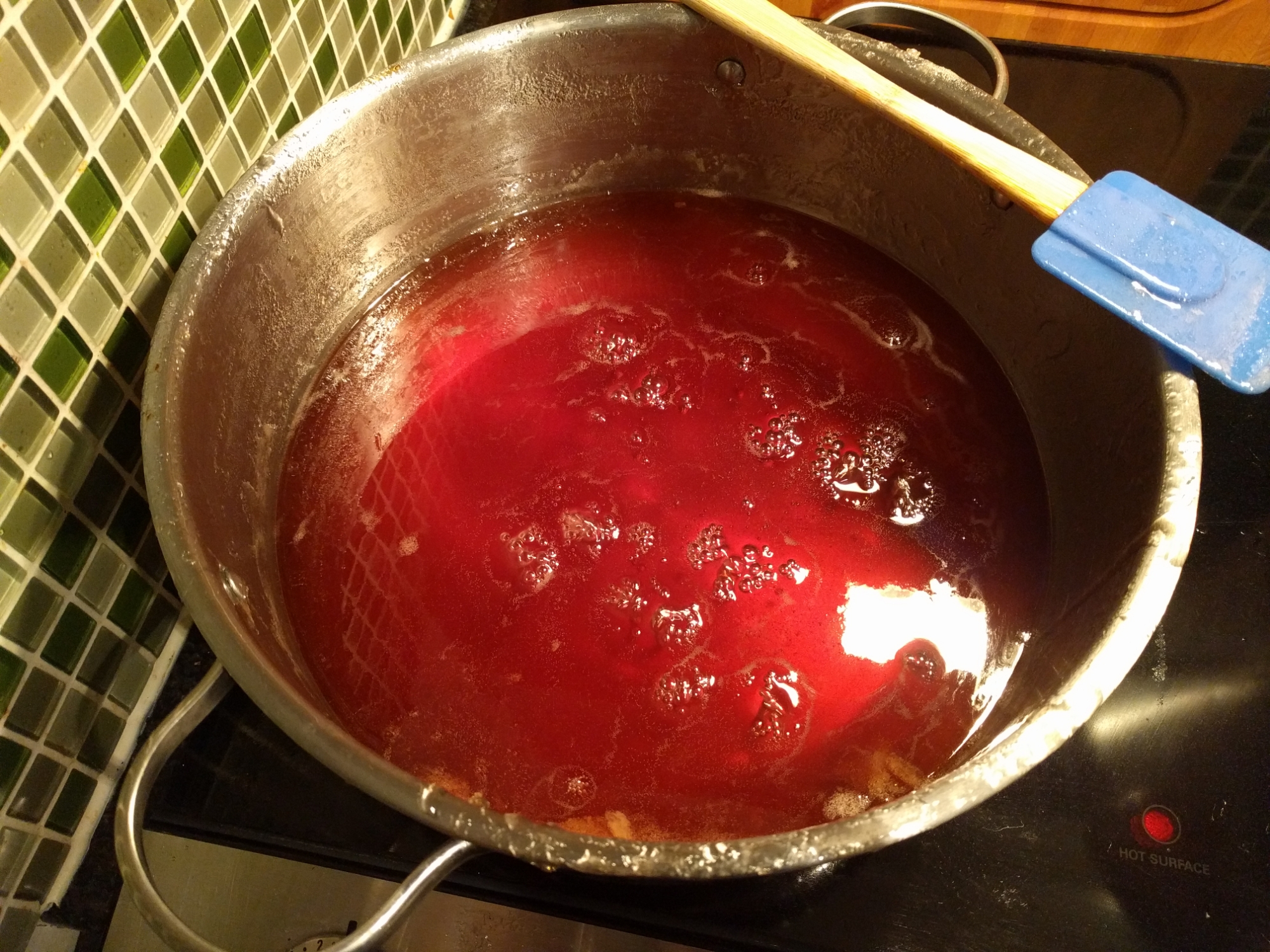
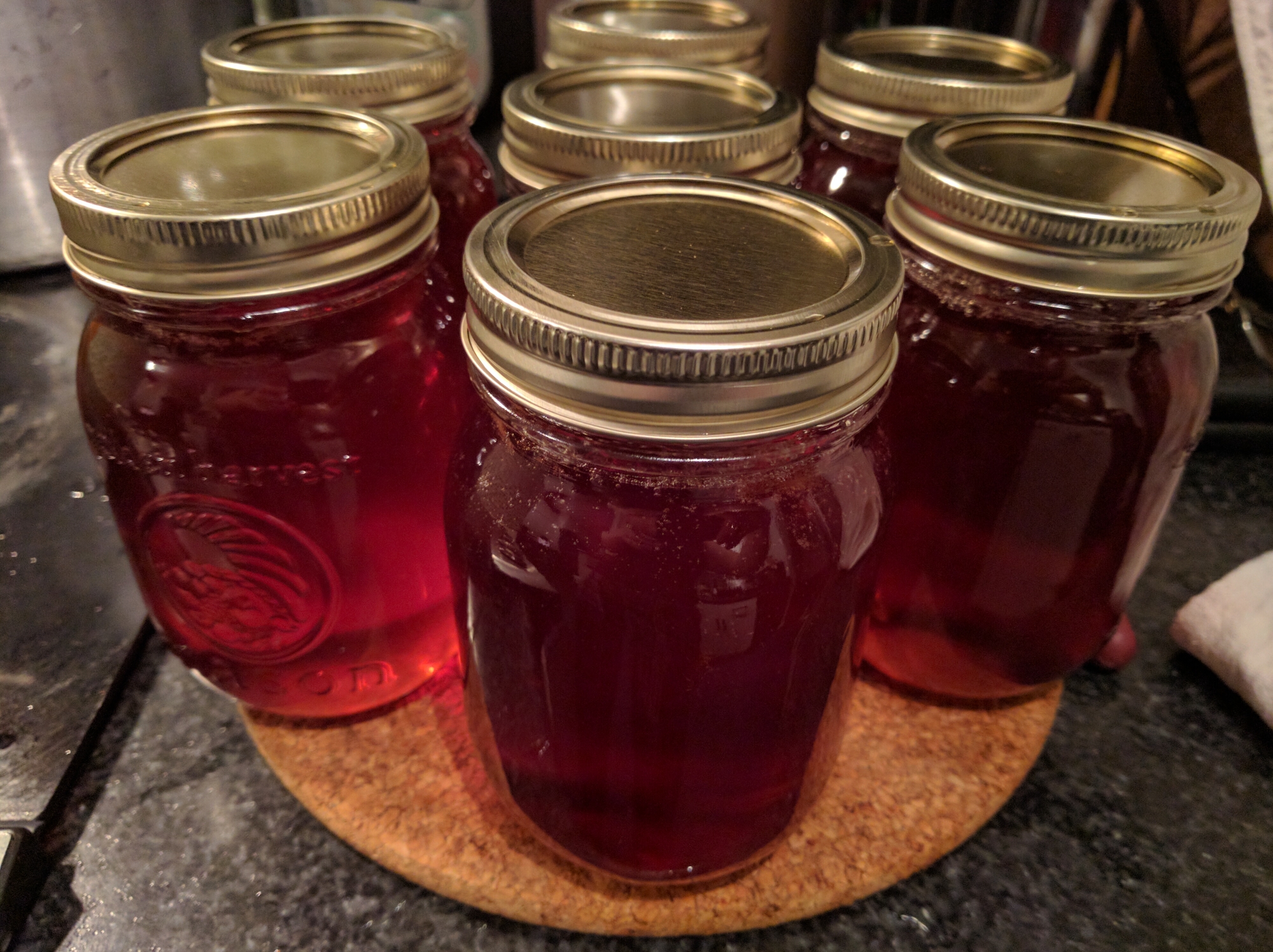
- Pour mixture into hot Mason jars and close with fresh snap lids and rings (refer again to Food in Jars for a good explanation)
- Process in a boiling water canner for the appropriate amount of time for the size of the jars (refer to this chart from the University of Minnesota for specifics related to altitude, jar size, and other variables)
To make your own pectin: follow steps 1 through 4 above, but use cores and peels from apples (or entire underripe apples) as your base fruit.